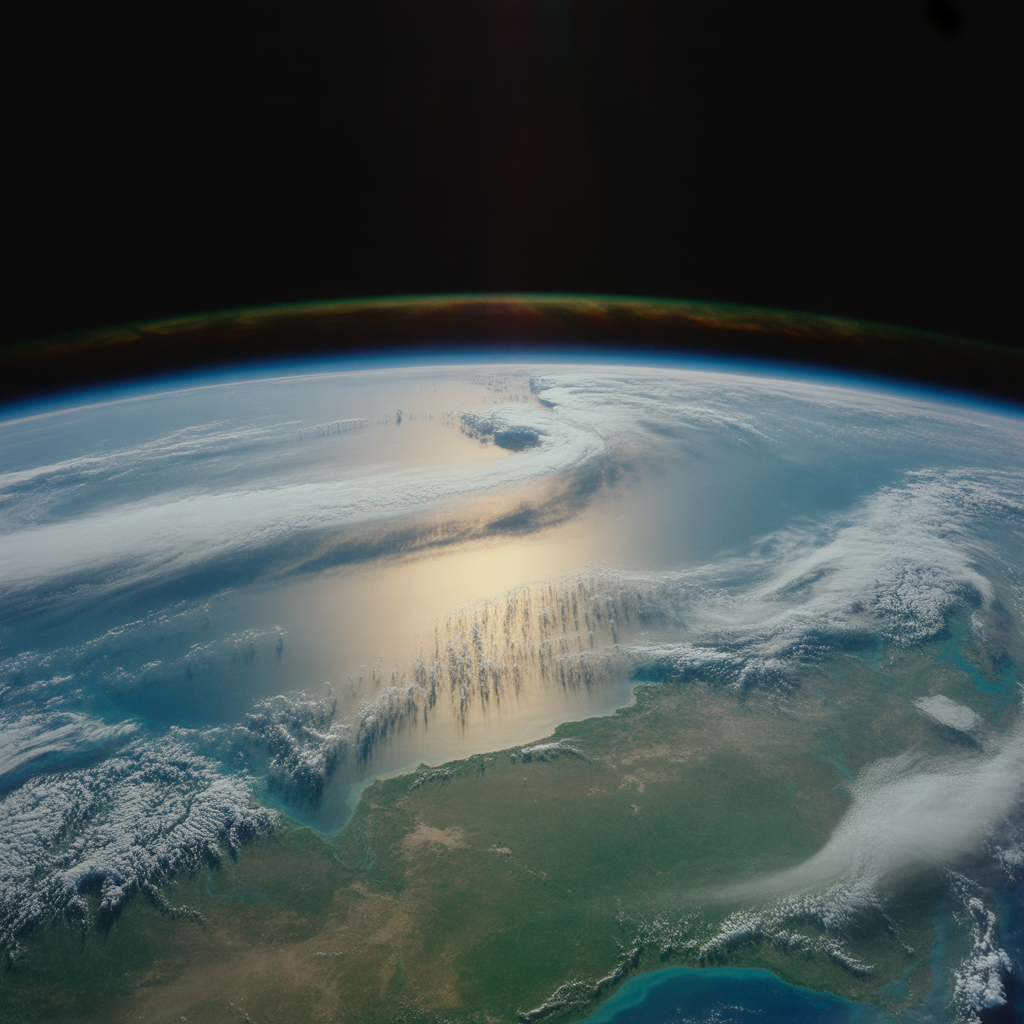
Earth is the only known planet in our solar system that supports life. It is often called the “Blue Planet” because about 71% of its surface is covered with water, mostly in the form of oceans, seas, lakes, and rivers. This abundance of water is one of the main reasons Earth can support life as we know it. Earth’s atmosphere, rich in nitrogen and oxygen, also plays a crucial role in sustaining life by providing breathable air and protecting living organisms from harmful solar radiation.
Unlike the other planets in the solar system, which are named after Roman gods and goddesses, Earth’s name has Old English and Germanic roots, simply meaning “ground” or “soil.” This reflects humanity’s long connection to the land.
A day on Earth lasts 24 hours, the time it takes for the planet to complete one full rotation on its axis. A year on Earth is approximately 365.2422 days—the time it takes for the planet to complete one orbit around the Sun. Since a calendar year is only 365 days, this extra fraction of a day is adjusted by adding an extra day to the calendar every four years. This additional day, February 29th, is called a leap day, and the year it occurs in is known as a leap year. This system helps keep our calendar aligned with Earth’s position in its orbit and the changing seasons.
Earth has a 23.5-degree axial tilt, which is responsible for the changing seasons. As Earth orbits the Sun, different parts of the planet receive varying amounts of sunlight at different times of the year, resulting in spring, summer, autumn, and winter. The tilt also causes the variation in day and night lengths throughout the year. Additionally, Earth rotates on its axis once every 24 hours, giving us the regular cycle of day and night.
Earth has one natural satellite—the Moon, also known as Luna. The Moon plays a vital role in stabilizing Earth’s rotation and axis tilt, which contributes to a relatively stable climate. It also affects ocean tides due to its gravitational pull.
In summary, Earth’s unique combination of water, atmosphere, distance from the Sun, and natural satellite makes it a rare and remarkable planet capable of supporting life.