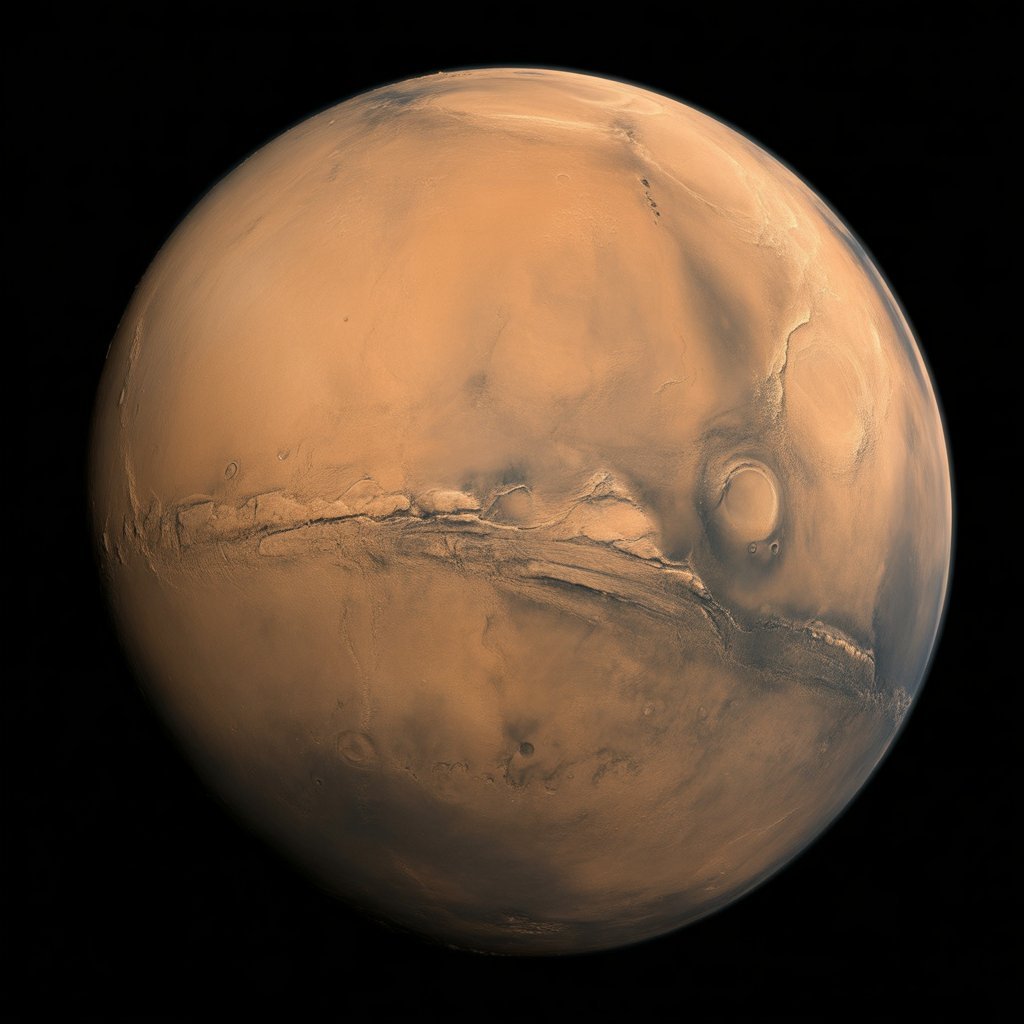
Mars is the fourth planet from the Sun and is often called the “Red Planet” due to its reddish appearance, which is caused by iron oxide (rust) on its surface. It was named after Mars, the Roman god of war. According to Roman mythology, some believed their ancestors fought and died on Mars, which they associated with the planet’s blood-red color.
Mars has two small moons, Phobos and Deimos. Scientists have discovered water on its surface in the form of ice, particularly at the polar caps. Many researchers believe that colonizing Mars could be possible in the future. However, there are significant challenges to overcome, including intense ionizing radiation on the surface and fine, toxic dust that covers the planet.
Although Mars has an atmosphere, it is very thin and unbreathable. Surface temperatures vary widely, ranging from about −70°C to 0°C (−94°F to 32°F). Despite the harsh conditions, NASA (National Aeronautics and Space Administration) has successfully sent five rovers to Mars: Sojourner, Spirit, Opportunity, Curiosity, and Perseverance. The most recent, Perseverance, landed on Mars in 2020.
The Martian surface is dry, rocky, and covered in reddish dust. It features vast deserts, enormous volcanoes like Olympus Mons—the tallest volcano in the solar system—and deep canyons such as Valles Marineris. Though it appears barren today, signs of ancient riverbeds suggest that Mars once had flowing liquid water.