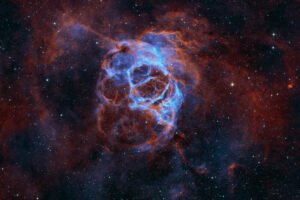
Stars are born within vast clouds of gas and dust known as nebulae. Over time, gravity causes this material to collapse inward until the core becomes hot and dense enough to ignite nuclear fusion. This process converts hydrogen into helium, releasing enormous amounts of energy that power a star for most of its life.
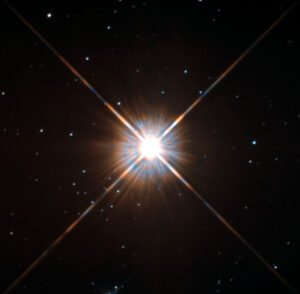
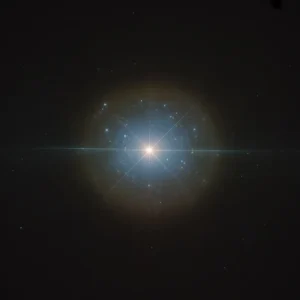
Stars are massive, glowing spheres of plasma composed primarily of hydrogen and helium. Although they emit a steady light, they appear to twinkle when observed from Earth due to distortions caused by our atmosphere. The energy produced by nuclear fusion generates outward pressure that balances gravity, maintaining a stable state known as hydrostatic equilibrium.
Stars vary widely in size, temperature, and color. Hotter stars appear blue, while cooler ones glow red or orange. Their life cycles span millions to trillions of years. Smaller stars, like the Sun, eventually expand into red giants before fading away, whereas massive stars may end their lives in dramatic supernova explosions, leaving behind neutron stars or black holes.
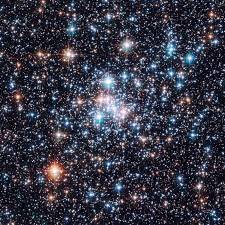
Stars are fundamental building blocks of galaxies. The Milky Way alone contains billions of them, while the observable universe holds trillions. Many stars exist in binary systems or clusters bound by gravity, and they play a crucial role in creating heavier elements—elements essential for planets and life itself.