
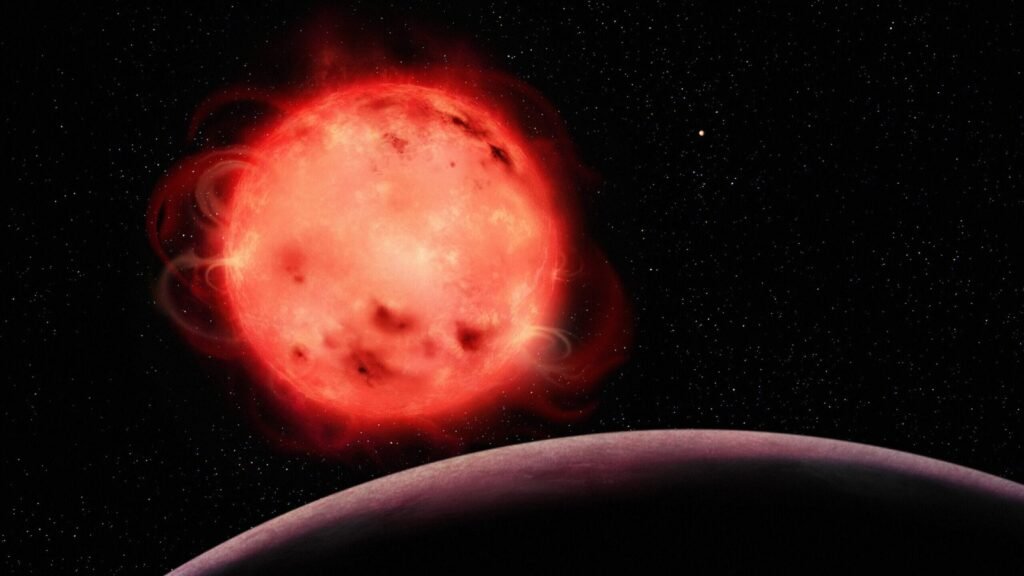
TRAPPIST-1 is one of the most remarkable star systems ever discovered because it is home to seven Earth-sized planets orbiting a small, cool red dwarf star. Located approximately 40 light-years away in the constellation Aquarius, TRAPPIST-1 is much smaller and cooler than our Sun, allowing several of its planets to orbit within the habitable zone, where liquid water could potentially exist under the right conditions.
Discovered between 2016 and 2017, the TRAPPIST-1 system quickly became a major focus of astronomical research and the search for extraterrestrial life. Since the planets regularly pass in front of their host star, scientists can analyze starlight passing through their atmospheres to study their composition. Advanced observatories, including the James Webb Space Telescope, continue to investigate these distant worlds for signs of water, atmospheric gases, and other indicators of habitability.
Although no evidence of life has been found so far, TRAPPIST-1 remains one of the most promising planetary systems for understanding whether Earth-like planets beyond our Solar System could support life.